
When Kindness is Enough
Leonard and Hungry Paul and The Psychology of Mattering

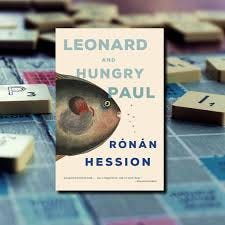
My wife always says that all novels are either a window into someone else’s life or a mirror of your own. Some great books, I think, can be both at the same time.
Leonard and Hungry Paul is one of those novels. It doesn’t impress you with flashy plot twists or deliver a clear-cut message through big speeches. Instead, it quietly shifts how you see things. After reading it, you start to notice the small parts of daily life: friendships that aren’t obvious, routines that seem plain, and simple acts of kindness that don’t get attention. The book feels gentle. Its gentleness comes from precision, not softness. This theme surfaces throughout the novel: something we rarely discuss but that shapes our lives is the need to feel that we matter.
York University (Canada) psychologist Gordon Flett’s seminal work in the “psychology of mattering” helps explain why some stories affect us so deeply. In his view, mattering is more than a feel-good slogan; it’s a basic psychological need. To matter is to feel important to others, to be noticed and valued, and to sense that your presence makes a difference in real relationships. This isn’t the same as belonging, which is about inclusion, or self-esteem, which concerns how you see yourself. Mattering is rooted in relationships and true impact. It’s the feeling that you genuinely count.
The opposite of mattering isn’t just loneliness. It’s what Flett calls anti-mattering: feeling invisible, irrelevant, or easily replaced. It’s not about being hated, just unnoticed. It’s not about being rejected, just feeling unimportant. It’s that cold feeling that nothing would change if you left the room.
Modern life is unusually good at producing anti-mattering. Not always through cruelty; often through busyness. Through the attention economy. Through status anxiety. Through the slow conversion of relationships into performances. Through a work culture that makes people feel like line items. In a social world where being seen is confused with being valued.
Against that backdrop, Leonard and Hungry Paul can read like a small rebellion. It refuses the modern equation: visibility = value. It refuses the idea that a meaningful life must be impressive. It treats ordinary decency not only as respectable but also as psychologically important. It suggests that the deepest kind of well-being is not the thrill of being admired, but the steadier experience of being significant—of being woven into other people’s lives in quiet, durable ways.
With this foundation, I will takes a broad perspective on the novel, focusing on why it feels comforting, what it says about human value, and the importance of its modest approach.
Mattering: The Need Beneath the Need
Taking mattering as our lens, we can better understand why people sometimes feel anxious for reasons that aren’t obvious.
Someone can have friends and still feel like they don’t matter. They might belong to groups, yet feel replaceable. Success doesn’t guarantee a sense of connection, and even active online lives—posting, creating, performing—may still leave an emptiness that “likes” can’t fill. That’s because mattering is not a surface experience. It’s not “I’m popular.” It’s “I’m significant.” It’s the difference between being watched and being held.
Flett’s framework is helpful because it puts clear words to something we all sense. Mattering includes at least three connected experiences:
1. Being noticed – not in the surveillance sense, but in the human sense: you register; you aren’t socially erased.
2. Being important – your well-being is relevant to someone else; your absence would be felt.
3. Making a difference – your actions have consequences; you can add value in a way that is recognized.
This idea forms a core argument: mattering is the foundation for our sense of self, reminding us we are not interchangeable.
Leonard and Hungry Paul feels powerful because it puts this idea at the heart of its story without making a big announcement about it. The book doesn’t preach “You matter.” Instead, it shows how mattering is created and put at risk. How it grows through attention, is protected by kindness, and can be lost through contempt or neglect.
The book also makes a bold point: much of the stress people feel today is really about not mattering, even if it takes other forms.
We often say stress comes from not having enough time, but that doesn’t explain why some busy people feel energized while others feel drained. We describe depression as feeling low, but that doesn’t capture the pain of feeling unimportant. We think loneliness is about not having enough contact, but meaningless contact can make things worse. You can be surrounded by people and still feel invisible. Understanding mattering provides the underlying argument for this discussion. And Leonard and Hungry Paul is a novel that refuses to let people become ghosts to one another.
The novel achieves this partly through its calm and respectful tone. It doesn’t make fun of awkwardness or treat social clumsiness as a flaw. It doesn’t reward charisma or look down on quiet people. In a world focused on spectacle, this book pays careful attention to the ordinary.
That kind of discipline is important because attention is what gives people a sense of mattering. We show others they matter by how we look at them, listen to them, remember things about them, and what we choose to do for them. Mattering isn’t just something we feel inside; it’s shaped by how we treat each other.
If that sounds like a high claim for a modest novel, that’s part of the point. One of the book’s gentlest provocations is that we’ve grown used to seeing “importance” as something that must be earned through dramatic acts. However, most of the human significance is earned through small, repeated acts of care.
The book suggests that it’s in ordinary life where our spirits are either fed or left hungry.

A Culture of Anti-Mattering, and Why This Novel Feels Like Relief
Describing modern life as a culture of anti-mattering means that the systems shaping our lives increasingly fail to recognize individual value, rather than simply reflecting unkindness among people.
Think about a typical day. At work, your value is measured in numbers. Online, your attention is constantly taken. Social media rewards performance. Friendships are squeezed into busy schedules. Your phone shows you highlights from other people’s lives. It makes it seem like your ordinary Tuesday doesn’t really count. The cultural mood is not just loneliness. It’s replaceability.
And replaceability is psychological poison.
Feeling replaceable, people respond in various ways. Some get louder, others try harder to be better. Others pursue perfection, create new images, numb their feelings, or end relationships before being left.
Much of what we call “hustle” is really a desperate effort to create a sense of mattering by performing. The problem is that performance-based mattering is shaky. It depends on what you do, and it only lasts as long as you keep performing. It’s like being on a treadmill: if you stop producing, do you still matter? If you stop being interesting, do people still notice you? If you stop being useful, do you still exist to others? This is why the book’s simple approach feels like a relief. It doesn’t ask the characters or the reader to become a brand or to reinvent themselves to prove they matter. Instead, it values loyalty, steadiness, and decency over showiness.
This redefinition of value leads to a deeper shift: it changes what a good life feels like.
Many modern definitions of flourishing quietly assume a life of expansion: more achievement, more experiences, more optimization, more self-actualization. There’s some truth in that. Still, the definition often forgets the human nervous system. A life built entirely on expansion can leave a person perpetually unmoored. This approach can turn the self into a project and other people into instruments. It can make mattering feel like something you’re always chasing and never inhabiting.
Leonard and Hungry Paul offers a different idea: a life focused on being present, not always upgrading. It doesn’t suggest we should never change, but it rejects the idea that the only way to live meaningfully is to always move upward or outward.
This is why the book can feel quietly countercultural. It dignifies forms of life that our culture tends to treat as “less than”: lives that are not ambitious in public, relationships that are not performative, virtues that do not advertise themselves.
The book also gently points out a common mistake: we often mix up being seen with being truly known.
Being seen can happen at scale. It can happen online. It can happen through a persona.
To be truly known takes time, patience, and the courage to be yourself around someone else.
Mattering depends more on being known than on being seen.
That’s what the novel keeps coming back to: ordinary life is where real meaning is found. Spectacular moments matter, but most of life is made up of ordinary times. If those moments don’t feel meaningful, people can slowly start to feel like they don’t matter either.
The book’s kindness is not aesthetic. It’s psychologically corrective.
The Ethics of Attention: How Mattering Is Made
One of the main ideas in Leonard and Hungry Paul isn’t just about being kind. It’s about how paying attention to others is a moral act.
This isn’t the kind of attention you use for getting things done. It’s about treating another person as real and important.
In daily life, we constantly send signals to each other about significance. We do it through micro-behaviors:
Do we respond, or do we leave someone dangling?
Do we ask follow-up questions, or do we pivot back to ourselves?
Do we remember what someone told us, or do we make them repeat their own story?
Do we treat someone’s small worry as stupid or as human?
Do we tease with affection, or with contempt?
Do we make space, or do we dominate it?
These small actions aren’t minor. They are what make people feel like they matter.
In a culture full of sarcasm and status games, attention is treated as a scarce resource people fight over. People end up always trying to prove they matter—trying to get noticed, get a laugh, or find their place. The result is that many feel like they have to compete just to feel real.
The novel refuses that competition.
It presents a social world where being ordinary is not a failure, where social missteps aren’t treated as disqualifying, and where the baseline stance toward other people is non-contempt. That last element is huge. Contempt is one of the fastest ways to destroy mattering. It reduces a person to a caricature. It says: “You don’t count enough to deserve respect.” If you’ve ever been mocked for your interests, awkwardness, or sincerity, you know the feeling: you suddenly shrink inside. It’s more than embarrassment. It’s anti-mattering. It’s the sense of being turned from a person into just a source of amusement.
Leonard and Hungry Paul refuses to take part in that kind of put-down. The book doesn’t let readers enjoy cruelty for fun. When there is humor, it never comes at someone else’s expense. This is one reason the book is oddly therapeutic. It offers an imaginative experience of a world where your quirks don’t make you disposable.
And it implies a broader claim: the capacity to confer matter. It also suggests something bigger: being able to make others feel like they matter is a real virtue. The virtue of noticing. The virtue of not treating human beings as background.
According to Flett, mattering isn’t just something you need, it’s something you can give. You can help others feel significant. You can be the reason someone feels they count, just by being there. In a world where many people long to feel that way, helping others feel they matter is an act of love.
The novel, in its calm way, trains the reader in this love. It makes you practice non-contempt. It makes you practice attention. It makes you practice taking small lives seriously. That’s not sentimental. That’s a moral education.
The Radical Proposal: A Good Life Without Spectacle
If you strip the novel down to its big philosophical proposition, it might be something like this:
A life can be good without being “impressive.”
That idea seems simple, but it’s much harder to live by.
Our culture has made “impressive” the default measure of worth. Even our self-help language often smuggles in the same metric: become extraordinary, maximize potential, crush goals, elevate your mindset. The underlying assumption is that a good life is a life that stands out.
But standing out is not the same as mattering.
In fact, a life that stands out can still feel empty if it isn’t rooted in real connections with others. On the other hand, a life that doesn’t stand out can be very meaningful if it’s built on caring. The novel strongly values being connected to others. It honors the small social groups that support our mental health: lasting friendships, real but imperfect families, and communities where people keep showing up for each other.
This is where the psychology of mattering helps explain the novel. You don’t have to be the best to matter. You just need to be significant to someone. That kind of significance usually happens in close relationships, by being important to a few people, not by being a spectacle for everyone.
That’s why the novel feels so at odds with the attention economy. The attention economy trains us to want global significance (or the illusion of it). Mattering pulls us back to human-scale significance.
And human-scale significance is often built from things our culture undervalues:
Consistency (showing up again)
Reliability (doing what you said)
Gentleness (not making people pay for your mood)
Patience (allowing growth to be slow)
Sincerity (risking being uncool)
Care (helping without needing credit)
None of these qualities are flashy. Many can’t be sold or turned into a brand without losing what makes them special. That’s part of what makes them beautiful.
The novel also gently destabilizes another modern assumption: that fulfillment is primarily individual. We speak of happiness as if it’s a private possession, a mood state you optimize through habits, gratitude journaling, cold plunges, and better boundaries.
But mattering is inherently social. It’s not something you can manufacture alone. You can improve your internal life, yes, but you cannot give yourself the feeling that you matter in the full sense. That feeling arises from being in reciprocal relationships where your existence has weight.
This is why so much well-being advice doesn’t work if it ignores our need for social connection. You can meditate all day, but if no one really sees you, needs you, values you, or would miss you, you can still feel like you don’t matter.
Leonard and Hungry Paul doesn’t give advice or tips. Instead, it shows a way of living where mattering comes from small, mutual acts of care. The book quietly suggests that true well-being comes not from self-esteem, but from being important to each other.
In positive psychology terms, you could say the novel is a hymn to the “R” in PERMA—relationships—not as a lifestyle accessory but as the actual scaffolding of meaning. But it goes beyond the generic “relationships are important” line. It focuses on the particular psychological sensation relationships can have. It also suggests that the biggest threat to well-being isn’t just suffering or stress, but the feeling that your struggles don’t matter; that they go unseen, unheard, and unsupported. That’s what anti-mattering feels like: being unheard…unheld.
This is why the book’s kindness feels so comforting. In the world of this novel, kindness isn’t just a random nice act. It’s a way of recognizing others and treating them as important.
A final, practical implication
If you finish the book and feel strangely steadier, it may be because it invites a different question than the one modern life constantly asks.
Modern life asks: How do I stand out? How do I win? How do I optimize? Mattering asks: Who feels more real because I’m here? Where am I truly irreplaceable—not just for what I do, but for who I am? Who do I help feel seen? I help not feel invisible?
That’s a different blueprint for a life. And this way of living isn’t just gentler. It’s also stronger.
A life built on performance falls apart when you can’t keep performing. But a life built on mattering lasts, through everyday routines, growing older, quieter times, and those moments when you don’t feel impressive at all.
In those moments, the question that decides whether you fall apart is not “Am I admired?”
It’s “Do I matter?”
This novel, in its calm and simple way, answers: yes, you do—if you live in a way that helps others feel like they matter too.
I especially liked your pointing how toxic "contempt" can be in relationships. John Gottman, the marriage therapist, identifies it as a fatal element that causes divorce.
Lovely! A related idea: we do stuff and it effects ripple out to others connected with us and ultimately out into the universe. We matter because we affect, but we often don't know how and who we effect. We matter much more than we ever know.